
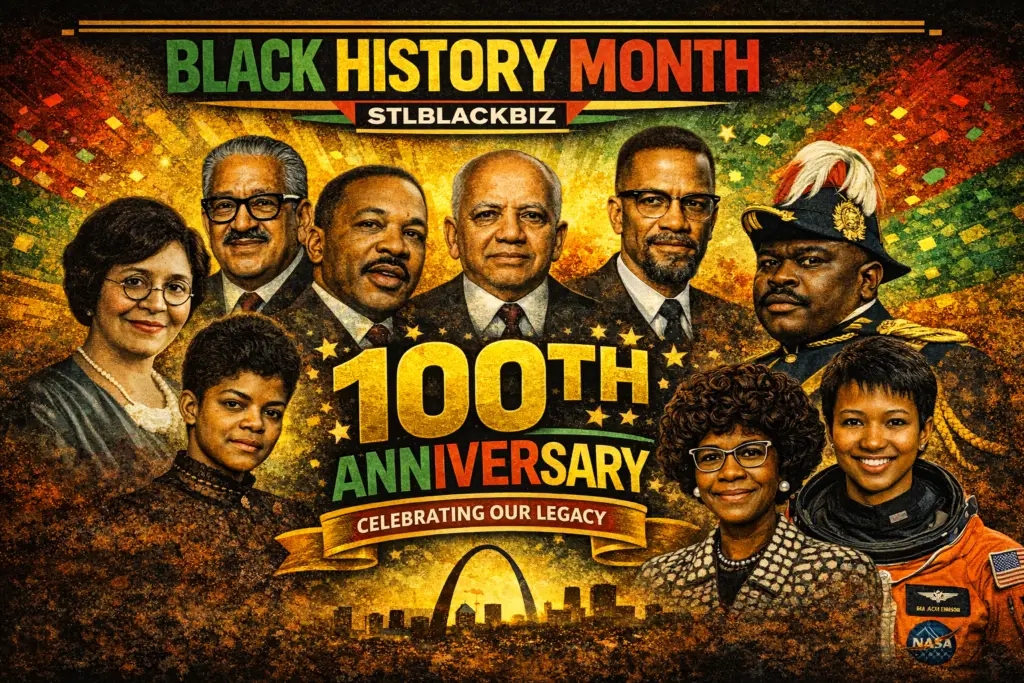
Black History Month at 100: Reflecting on the Past, Building the Future In 2026, Black History Month marks its 100th anniversary. Learn the origins of Black History Month, honor iconic Black leaders, and explore how to carry the legacy forward through action and community impact.
100th Anniversary of Black History Month: Why 2026 Matters
Black History Month hits different in 2026. This year marks the 100th anniversary of Black History Month, tracing its roots back to Negro History Week in 1926, founded by historian Dr. Carter G. Woodson and the Association for the Study of Negro Life and History (now ASALH). What began as a single week of recognition later expanded into Black History Month in 1976, becoming a permanent national observance.
A century later, the message remains clear: Black history is American history, and it deserves to be told fully, accurately, and without erasure.
Dr. Carter G. Woodson and the Purpose of Black History Month
Dr. Carter G. Woodson did not create Negro History Week simply to celebrate achievements. His mission was correction. He understood that when Black contributions are excluded from history books, society inherits a distorted version of truth. The 100th anniversary of Black History Month serves as a reminder that truth-telling is foundational work, not optional work.
Preserving Black history ensures future generations understand where progress came from and why it must be protected.
Honoring Black Leaders Who Changed History
This milestone also calls us to honor the leaders who pushed America forward, often while facing resistance at every turn.
- Ida B. Wells risked her life to expose racial violence and defend Black humanity through fearless journalism.
- Thurgood Marshall used the legal system to dismantle segregation and later became the first Black U.S. Supreme Court Justice.
- Shirley Chisholm broke political barriers as the first Black woman elected to Congress and the first to run for president.
- Dr. Mae Jemison shattered ceilings in science and space as the first Black woman astronaut.
- Malcolm X and Dr. Martin Luther King Jr. remind us that liberation movements are not one-note, but multifaceted efforts moving toward the same goal: freedom.
The Future of Black History Month Starts Now
The 100th anniversary of Black History Month is not just about reflecting on the past. It’s about what comes next.
Celebration must turn into action: supporting St. Louis Black-owned businesses, preserving Black landmarks, funding Black-led organizations, hiring Black talent, and teaching accurate Black history in schools and homes. Visibility, investment, culture, and, education are how legacy survives.
A hundred years in, Black History Month is not a trend. It’s a torch. And we’re still carrying it forward here in the ST. Louis area.